
 Remember the story of Bruce and the spider? That tale of how a tiny creature’s persistence provided the spur that Bruce needed to keep going in the face of insurmountable odds? With the benefit of hindsight we know that success was eventually to be his. But he didn’t know that. He had to face his darkest moment without knowing what the future would bring.
Bruce had suffered terrible losses; the barbaric torture and death of some of his closest family, the imprisonment of others, the loss of Scotland. How much easier it could have been for him to turn and run. Give up and disappear from history. But he didn’t.
Visiting the cave and writing about it for the current edition of Scottish Islands Explorer, I found myself thinking that the central message of Bruce’s tale resonates just as strongly today as it did all those centuries ago. Like Bruce, we often have to take a leap of faith, not knowing what the final outcome will be, but hoping that the decision we’ve made is the right one.
 Bruce faced terrible odds and knew only too well that his decision would impact on the lives of many, many people. That was a heavy responsibility. Right now, in countries like Syria and Yemen, men, women and children are facing the horrors of war, torture and starvation. Drug wars rage in South America. Torture and beheading in Saudi Arabia. Ours is not a peaceful world. Yet despite that, there are always those courageous enough to take the decision to stand up against oppressors, no matter how impossible the odds appear.
Fortunately our decisions seldom put us in physical danger, but they’re still important. They affect us as individuals, but also the wider community around us. So, like Robert the Bruce, what we decide to do – or not to do – is important for more than just ourselves.
 Arran is a beautiful island; rich in geology, archaeology, history and natural beauty and this cave is full of signs that it’s been used for centuries. For one thing, it’s a treasure trove of carvings: everything from present day graffiti to ogham (Celtic) writing; animals, crosses, swords and much more. Carvings from the Bronze Age, early Christian era, Norse, Medieval, and Victorian times. It’s all there for the eagle-eyed to spot!
King’s Cave on Arran may or may not be the actual location of the Bruce story, but that moment in Bruce’s life was nonetheless a pivotal moment in Scotland’s history. The cave is an evocative place to visit and ponder on the courage it can take to stand up for our convictions. And should doubts arise, remember Bruce and his spider!
 When we come out at the other end of this corona virus pandemic, just how will we look back at what happened to us, to our families, to our communities? Every generation lives through history in the making, but when you’re in the middle of events the end result is unknown: you don’t have the luxury of hindsight. And that uncertainty isn’t just unsettling. It’s frightening.


 The good and the bad. The joyous and the heartbreaking. Bravery in the face of war and cruelty. Kindness and generosity in times of adversity. The exciting and the mundane. The patterns of day-to-day life.
 “It was a dark and stormy night …” I wonder how many stories have opened with those famous words? Words first penned by American author Washington Irvine in 1809. Although much parodied, it’s an opening phrase that was used to great effect by Madeleine L’Engle in her ground-breaking novel A Wrinkle in Time, a book that had a profound influence on me as a child. L’Engle opened the door to a whole generation of children in the 1960s onwards with her stories that combined science fiction and fantasy with the spiritual and questions of good and evil. The first in a series, the book went on to win many literary awards and be dramatised for stage, radio, television and film.
 Scotland, with its wealth of islands, has long been fruitful territory for crime writers, perhaps the best known being Peter May and Ann Cleeves, featuring the Hebrides and Shetland respectively. But there are many others and in the current issue of Scottish Islands Explorer I look at novels by two Scottish authors, Lin Anderson and Craig Robertson, who use distinctive and very different island settings for their characters’ dark deeds!
 There are one or two places on the west coast of Scotland that are not islands as such, but which are, to all intents and purposes, islands. Scoraig on Little Loch Broom in Wester Ross is one. To reach Scoraig you can either go by boat (the easy way – though always weather dependent!) from Badluarach on the south shore of Little Loch Broom – or you can walk. There is no road, no vehicular access, only a dramatic 5-mile cliff-side path. This was the route we chose. The walk starts at the road end at Badralloch and offers spectacular views down the length of Little Loch Broom.
 But battle on they did, and that so many survived is a tribute to the courage and determination of the inhabitants. Life continued, families grew and according to Scoraig’s community website, there were 61 children at the school in 1873. However, as steamer transport declined and road and rail routes passed Scoraig by – as well as the drastic toll of two world wars – the population began to dwindle and it looked as though Scoraig was finished.


 Holiday accommodation comes in all shapes and sizes. Sometimes the reality turns out to be not quite as it seemed in the brochure, while on other occasions you arrive to find it’s even better than expected. Coillabus on Islay was one of those, especially when we arrived at the lodge and saw the breathtaking 180° views over the north-west of the Oa. In fact, we could even see all the way along Glen Astle to the Rinns of Islay lighthouse on the small island of Orsay!
 Set into the hillside, the lodge is almost invisible from the road, with curving stone walls and a turf roof that blend into the surrounding landscape: “Traditional black house meets neolithic with a healthy dose of contemporary chic”, as one description imaginatively puts it! And that’s not far wrong. Even the instructions on how to get there were magical: “The road becomes narrow with twisty corners in places. Continue past…the house with hens and other livestock. Go up round past Connachan’s Grave, a chambered cairn on your left…then up a really steep bend past a house with…more hens who might be responsible for your breakfast eggs”! How often do you get directions like this!
 However, there is continuity with the island’s past as the Coillabus lodges lie within a family-owned working hill farm and were built with local stone by local craftsmen. The modern, environmentally-friendly underfloor heating makes for a warm and comfortable stay. We were fortunate to have good weather during our visit, but the lodge is so well insulated the weather almost didn’t matter! In fact, you could say it’s a ‘weatherproof’ house where the drama of a storm raging outside would be thrilling to watch through the magnificent panoramic windows.
 In the current issue of Scottish Islands Explorer I look at some of the ways architects are taking the best from the past and combining it with modern technology. Coillabus, and properties like it, give the lie to the notion that eco-friendly living means a primitive existence! In Scotland we’re well on the way to meeting our electricity needs through renewables. Using air and ground source heat pumps, it’s great to see a growing number of buildings where the old meets the new to create something both sustainable and comfortable – and in this case very much in keeping with a glorious island setting. Coillabus is undoubtedly an example of the way to go!
 ‘Climb every mountain …’


 It’s a place I’ve been back to on many occasions and I’ve written about some of the things that made this place special not just to me and my family, but to many others. It’s good to have places like this, places that played their part in our young lives and continue to hold such a store of fond memories. Whilst I’d still find it impossible to name a favourite place, High Corrie comes pretty close!

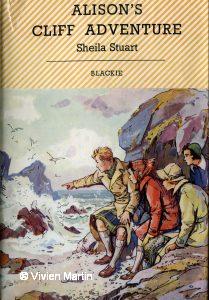
 As holidays became more common, and for longer periods, people sought the fresh, clean air of the countryside. For families with children camping coaches held a greater appeal than spending your holiday under canvas. In the railway coach you had a proper roof over your head and more space, but were still away from home. They were also usually set beside beautiful remote rural and coastal areas of Britain. Cheaper too than a guest house. Private cars were not common, so being able to take the train right to your holiday doorstep was an additional bonus.
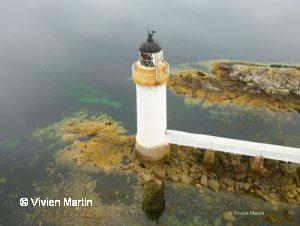 The camping coach at Plockton may be long gone, but today the station building itself is available for holidays. And in a few places the camping coach is making a come-back. So if you have fond memories from your childhood, or have children who revel in Thomas the Tank Engine, then one of today’s new camping coaches might just be the place for you! It certainly was a brilliant ‘Camping Coach of Adventure’ for us !


