
 I suspect some visitors head to Scotland believing it consists almost entirely of castles and ghosts. Not a surprising misconception, as that’s all too often the image presented to visitors by tourism agencies. While I agree that understanding the past is important, it’s also equally, if not more, important to be aware of what’s going on now and how that takes Scotland forward. There’s much more to Scotland than a romanticised past.
The great Scottish author and artist Alasdair Gray once said “Work as if you live in the early days of a better nation”, a quote now engraved on a wall of the Scottish Parliament. It’s a very positive sentiment and a good starting point for looking at what’s going on in Scotland today. Seeing what people are doing right now and how these activities work towards making Scotland that better, independent nation Alasdair so longed to see.
 With that in mind I took a trip up to Loch Fyne head to see what’s happening there. It’s an area I know well – long school holidays spent in the rambling manse in Inveraray saw to that! And then there’s the wonderful drive to get there – a real treat in itself. Up along the shores of Loch Lomond. Past Ardgartan and up into the Arrochar Alps with a welcome pause at Rest and Be Thankful. Then down to the small settlement at Clachan at the head of Loch Fyne.
I soon discovered that for such a seemingly small place, there’s an impressive amount going on. Alongside a hefty dose of fascinating history, there’s a present day array of businesses and projects all of which are helping create a sustainable environment for people to live, work and flourish in this beautiful area.
 The visitors’ hub Here We Are is central to an impressive number of wide-ranging projects, showing just what can be achieved when a community is determined enough and not afraid to accept challenges. On their website I noticed an interesting and very pertinent quote by Magnus Linklater, “If we are not aware of our own values we become victims of other peoples’ decisions. We have to bend to their agenda rather than ours, and that means not just a lack of trust in ourselves, but an aversion to risk and an inability to take decisions of our own.” This local community has certainly shown how well trusting in themselves can work!
In this month’s iScot article I talk to some of the people involved with these projects and look at the positive difference they are making to the future prospects for this area. Take a look at the Here We Are website and get a feel for what’s afoot. Or better still, visit Loch Fyne head yourself and discover its wealth of attractions and enterprises. Enterprises that aren’t there simply for the benefit of passing tourists, but are the lifeblood of the people for whom this is home.
My article can be read it full in this month’s iScot Magazine : https://www.iscot.scot/
 How often do we talk to a friend, thinking we know them well, only for something to be said or done and suddenly we find ourselves realising we don’t really know them as well as we thought we did? We might have to reassess our relationship with them, take a more honest view of the sort of person they are. But that’s not necessarily a bad thing. Besides which, aren’t we all far more interesting for all our own quirks and idiosyncrasies?!
 While writing this month’s article for iScot magazine, I had the opportunity to look at some of the issues they raise in their book. Although it’s not my home now, I’ve enjoyed this opportunity to look anew at the Edinburgh I’ve spent many years in: whether studying, working or being a parent. And just as we do our friends a grave disservice if we expect perfection from them, we do ourselves a grave disservice if we fall for the picture-perfect view of Edinburgh so often presented to us. People and places are a complex, yet rich, tapestry of history and experience. Never static and always changing. Edinburgh is definitely worth a second look, and this book might just help you to do that.
 How time flies! It’s 30 years since the Fall of the Berlin Wall and 5 years since

 Question: What’s the connection between Henry ‘Birdie’ Bowers, the explorer who died along with Scott in the Antarctic, James Dobbie, nurseryman and founder of the well-known chain of garden centres and a Syrian patisserie with the best breakfasts in town?


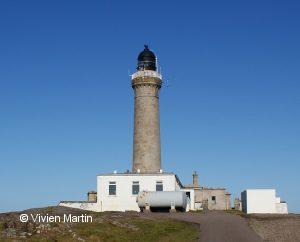
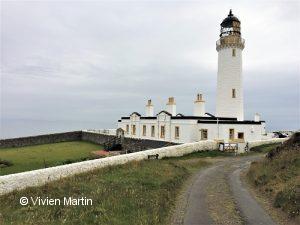
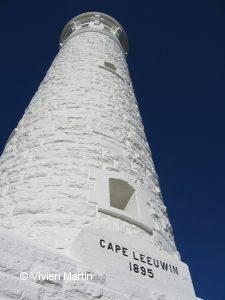
 I’ve climbed lighthouses from Cape Wrath at the very north of mainland Scotland to Cape Leeuwin at the southernmost tip of Western Australia and enjoyed every single visit. On a recent trip to Galloway we went to see some of the many lights around that coast, and what we experienced there, along with a host of fascinating events associated with them, led me to write this month’s article in
  Two and a half thousand years ago the Greek philosopher Heraclitus famously remarked that you can never step in the same river twice. Nothing stays the same. Not humans, or nations, or landscapes. For Heraclitus, ever-present change was the fundamental essence of the universe.
 We can create such beauty, but also destroy and scar the landscape, and the lives of those who live there, with such thoughtlessness, not only for the present but also for the future.
 Flanders Moss: it sounds like the site of a WWI battle, but in fact it’s a stretch of raised peat bog in the heart of the Carse of Stirling. By the 1970s this ancient peat bog wasn’t looking too good. Decades – if not centuries – of attempts to remove the peat had turned some of the area into workable agricultural land, but unfortunately left large expanses of the bog dried-up and barren. Today, however, the story is very different and this precious landscape is being restored to a much healthier state.
 But why, you might ask, would you want to restore a bog! We tend to think of bogs as bleak, miserable places: difficult to walk across and even deadly (think Grimpen Mire in the Hound of the Baskervilles). But, in fact, they’re hugely important. Not only are they a vital habitat for many plants and animals, but they’re extremely effective carbon sinks, removing harmful carbon dioxoide from the atmosphere. We need them!
 But it’s also a fun day out! With a hint of adventure, you have to take care not to step off the boardwalk into the water-logged ground beside you. You’ll hear birdsong and the hum of busy insects and there’s also a good chance you’ll spot some four-winged dragonflies, multicoloured butterflies, sun-bathing lizards, even juicy cranberries, or dazzlingly white bog-cotton and, if you’re really lucky, that tiny, carnivorous, insect-eating plant, sundew!
 The bog began its life over 8,000 years ago, sitting as it does on water-logged clay soil, and in places the peat is 23 feet (7 metres) deep – and still growing. But so slowly that there’s little danger we’ll sink under it! That depth of peat, however, is a goldmine to scientists who are able to use it to chart those 8,000 years of changes in climate and sea-levels; and to learn how humans interacted with this landscape.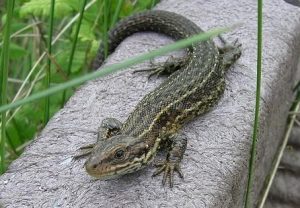
 He was once a character known the world over, yet today


 One of his favourite, and oft-repeated journeys, was on the West Highland Railway up to Fort William and on to the fishing port of Mallaig. The growth of railways had opened up parts of Scotland that had previously only been accessible to the very wealthy. Now travel was there for all.
 “It was a dark and stormy night …” I wonder how many stories have opened with those famous words? Words first penned by American author Washington Irvine in 1809. Although much parodied, it’s an opening phrase that was used to great effect by Madeleine L’Engle in her ground-breaking novel A Wrinkle in Time, a book that had a profound influence on me as a child. L’Engle opened the door to a whole generation of children in the 1960s onwards with her stories that combined science fiction and fantasy with the spiritual and questions of good and evil. The first in a series, the book went on to win many literary awards and be dramatised for stage, radio, television and film.
 Scotland, with its wealth of islands, has long been fruitful territory for crime writers, perhaps the best known being Peter May and Ann Cleeves, featuring the Hebrides and Shetland respectively. But there are many others and in the current issue of Scottish Islands Explorer I look at novels by two Scottish authors, Lin Anderson and Craig Robertson, who use distinctive and very different island settings for their characters’ dark deeds!
 “The past is still a place that is not safely settled,” wrote Michael Ondaatje, the Sri Lankan-born Canadian author, best known for his Booker Prize winning novel The English Patient. At the start of Ondaatje’s tale neither the patient’s name nor his past are known, but as the story unfolds his true identity, and the tragic events leading to his desperate state, are gradually revealed.

