When we come out at the other end of this corona virus pandemic, just how will we look back at what happened to us, to our families, to our communities? Every generation lives through history in the making, but when you’re in the middle of events the end result is unknown: you don’t have the luxury of hindsight. And that uncertainty isn’t just unsettling. It’s frightening.
Life is very strange right now. On one level, everything looks just the same, be it your house or your street: but in reality it’s very different indeed. The silence for one thing. Virtually no traffic, or planes; even the sound of children playing is diminished.

Fishing and ferries – an island’s lifeblood
In an earlier article I looked at how vital our memories are for our personal identity. You only need to see the devastating effects of dementia on a loved one to appreciate that. The writer Julian Barnes puts it very succinctly: “Memory is identity….You are what you have done; what you have done is in your memory; what you remember defines who you are; when you forget your life you cease to be, even before your death.”

The Tuscania Bell and the flag sewn by Islay women for the burial of the young American dead
But equally, we are social beings and the collective memories of our communities are an integral part of our existence too. Who we are today is influenced by the lives of those before us. Japanese author Haruki Murakami examines this in his unsettling novel 1Q84, with his protagonist Tengo saying, “Robbing people of their actual history is the same as robbing them of part of themselves. It’s a crime. Our memory is made up of our individual memories and our collective memories. The two are intimately linked. And history is our collective memory. If our collective memory is taken from us – is rewritten – we lose the ability to sustain our true selves.” Powerful words.

Bottles recovered from the WW2 airbase, including Brylcreem!
We can contribute to, and access, that vital collective memory in many different ways: books, films, photo albums, family history and tales told us by our parents and grandparents. But we’re a tactile species and sometimes seeing and touching objects brings the past to life in a very immediate way. And that’s where local museums come in.
One of my favourites is the wonderful Museum of Islay Life. In the current issue of Scottish Islands Explorer I look at that museum and how its contents reflect the life and times of the people of that island. From the mesolithic right up to the present day, Islay’s people, places and history are there to discover in the Tardis-like building.  The good and the bad. The joyous and the heartbreaking. Bravery in the face of war and cruelty. Kindness and generosity in times of adversity. The exciting and the mundane. The patterns of day-to-day life.
We’re all in limbo at the moment. We can’t go anywhere. Yet, inadvertantly, we’ve been given a unique opportunity to pause and take stock. To be inventive. To realise what we can actually do without and what really is essential. To create positive memories for ourselves and our families, even when that’s not easy. And be ready for the time we are once again free to go!
 What connects a Highland wilderness, a former east-coast fishing town and Glasgow’s respectable West End? The answer? Crime! But fear not, it’s fictional crime I’m talking about!
 In the Highlands I’m often struck by that curious juxtaposition between the breathtaking landscapes and the tiny settlements scattered across them. Towering mountains and huge skies. All that space and yet so few people. What made Gareth Halliday chose this place for his debut novel From the Shadows?
 A document that contains the famous lines, “For so long as but a hundred of us remain alive, we shall never under any circumstances submit to the domination of the English. It is in truth not for glory, nor riches, nor honours that we are fighting, but for freedom alone, which no honest man gives up but with life itself.” And this is the ancient town where Jackie McLean sets her crime novels.
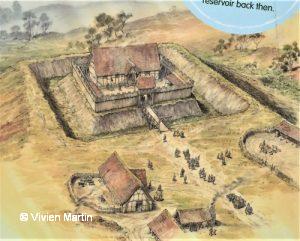
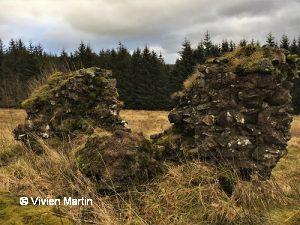
 The view might be very different from John de Graham’s time, but the setting is still as commanding. De Graham, friend and ally of William Wallace, is believed to have had his home on this spot, overlooking the Carron Valley in Stirlingshire. There’s a picture on the information board showing what the ‘castle’ would have looked like: a medieval earthwork with a substantial timber-framed hall, defended by an impressive square moat. The line of the moat is still very much in evidence, though nothing remains of the hall, and today the mighty Carron Reservoir fills much of the valley below.
 John de Graham of Dundaff (another name for this fortified site), was a 13th century Scottish noble who fought alongside Wallace in the First Scottish War of Independence, and who fell at the Battle of Falkirk on 22 July 1298. On that terrible day the Scots, unable to withstand the force of the heavy English armoured cavalry and the deadly Welsh longbows, were defeated by Edward I of England. De Graham died but Wallace survived and is said to have sought out de Graham’s body and carried it from the battlefield himself. De Graham was the most notable casualty of that terrrible day and is buried at Falkirk Old Parish Church. Wallace then retreated to de Graham’s home by the Carron Water.
 Many years later a famous narrative poem, The Actes and Deidis of the Illustre and Vallyeant Campioun Schir William Wallace (also known as The Wallace), was written by the poet Blind Harry. It portrays Sir John de Graham as one of William Wallace’s principal supporters and describes Wallace’s feelings of loss and sadness at the demise of his friend. There’s no doubt that de Graham’s death was a sore blow to Wallace, who lost not only his right-hand-man, but also a close friend.
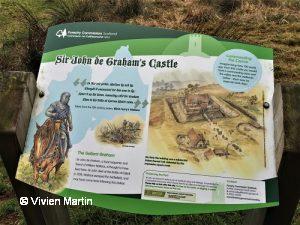 Ritchie continues, “Although Blind Harry’s poem was written long after the event, it does clearly link his Sir John de Graham to the area; and although the earthwork was likely built some years beforehand, it does mark the feudal estate of Dundaff, property of the de Graham family. Fact and fiction do seem to meet at Sir John de Graham’s castle to tell a story of place that is firmly rooted in the past.”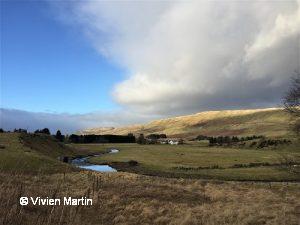
 I suspect some visitors head to Scotland believing it consists almost entirely of castles and ghosts. Not a surprising misconception, as that’s all too often the image presented to visitors by tourism agencies. While I agree that understanding the past is important, it’s also equally, if not more, important to be aware of what’s going on now and how that takes Scotland forward. There’s much more to Scotland than a romanticised past.
 With that in mind I took a trip up to Loch Fyne head to see what’s happening there. It’s an area I know well – long school holidays spent in the rambling manse in Inveraray saw to that! And then there’s the wonderful drive to get there – a real treat in itself. Up along the shores of Loch Lomond. Past Ardgartan and up into the Arrochar Alps with a welcome pause at Rest and Be Thankful. Then down to the small settlement at Clachan at the head of Loch Fyne.
 The visitors’ hub Here We Are is central to an impressive number of wide-ranging projects, showing just what can be achieved when a community is determined enough and not afraid to accept challenges. On their website I noticed an interesting and very pertinent quote by Magnus Linklater, “If we are not aware of our own values we become victims of other peoples’ decisions. We have to bend to their agenda rather than ours, and that means not just a lack of trust in ourselves, but an aversion to risk and an inability to take decisions of our own.” This local community has certainly shown how well trusting in themselves can work!
 How often do we talk to a friend, thinking we know them well, only for something to be said or done and suddenly we find ourselves realising we don’t really know them as well as we thought we did? We might have to reassess our relationship with them, take a more honest view of the sort of person they are. But that’s not necessarily a bad thing. Besides which, aren’t we all far more interesting for all our own quirks and idiosyncrasies?!
 While writing this month’s article for iScot magazine, I had the opportunity to look at some of the issues they raise in their book. Although it’s not my home now, I’ve enjoyed this opportunity to look anew at the Edinburgh I’ve spent many years in: whether studying, working or being a parent. And just as we do our friends a grave disservice if we expect perfection from them, we do ourselves a grave disservice if we fall for the picture-perfect view of Edinburgh so often presented to us. People and places are a complex, yet rich, tapestry of history and experience. Never static and always changing. Edinburgh is definitely worth a second look, and this book might just help you to do that.
 How time flies! It’s 30 years since the Fall of the Berlin Wall and 5 years since

 Question: What’s the connection between Henry ‘Birdie’ Bowers, the explorer who died along with Scott in the Antarctic, James Dobbie, nurseryman and founder of the well-known chain of garden centres and a Syrian patisserie with the best breakfasts in town?


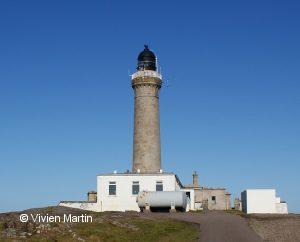
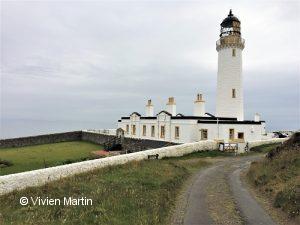
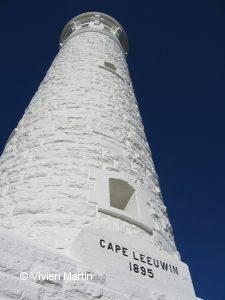
 I’ve climbed lighthouses from Cape Wrath at the very north of mainland Scotland to Cape Leeuwin at the southernmost tip of Western Australia and enjoyed every single visit. On a recent trip to Galloway we went to see some of the many lights around that coast, and what we experienced there, along with a host of fascinating events associated with them, led me to write this month’s article in
  Two and a half thousand years ago the Greek philosopher Heraclitus famously remarked that you can never step in the same river twice. Nothing stays the same. Not humans, or nations, or landscapes. For Heraclitus, ever-present change was the fundamental essence of the universe.
 We can create such beauty, but also destroy and scar the landscape, and the lives of those who live there, with such thoughtlessness, not only for the present but also for the future.
 Flanders Moss: it sounds like the site of a WWI battle, but in fact it’s a stretch of raised peat bog in the heart of the Carse of Stirling. By the 1970s this ancient peat bog wasn’t looking too good. Decades – if not centuries – of attempts to remove the peat had turned some of the area into workable agricultural land, but unfortunately left large expanses of the bog dried-up and barren. Today, however, the story is very different and this precious landscape is being restored to a much healthier state.
 But why, you might ask, would you want to restore a bog! We tend to think of bogs as bleak, miserable places: difficult to walk across and even deadly (think Grimpen Mire in the Hound of the Baskervilles). But, in fact, they’re hugely important. Not only are they a vital habitat for many plants and animals, but they’re extremely effective carbon sinks, removing harmful carbon dioxoide from the atmosphere. We need them!
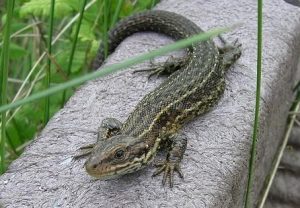
 But it’s also a fun day out! With a hint of adventure, you have to take care not to step off the boardwalk into the water-logged ground beside you. You’ll hear birdsong and the hum of busy insects and there’s also a good chance you’ll spot some four-winged dragonflies, multicoloured butterflies, sun-bathing lizards, even juicy cranberries, or dazzlingly white bog-cotton and, if you’re really lucky, that tiny, carnivorous, insect-eating plant, sundew!
 The bog began its life over 8,000 years ago, sitting as it does on water-logged clay soil, and in places the peat is 23 feet (7 metres) deep – and still growing. But so slowly that there’s little danger we’ll sink under it! That depth of peat, however, is a goldmine to scientists who are able to use it to chart those 8,000 years of changes in climate and sea-levels; and to learn how humans interacted with this landscape.