 What is it that makes us who we are? What are the experiences that shape and define us? The circumstances that create our beliefs and values? What are the factors that have made Scotland the country it is today; the country we call home? Intriguing questions that lead in turn to the question of how we preserve our identity, both as individuals and as nations. How do we protect the integrity of our past, our history, our heritage? And crucially, who is it that decides what is important, or significant enough to be preserved? Why are some people and events remembered and celebrated, while others are brushed to one side, forced into obscurity? These were some of the questions I put to Dr Elspeth King, director of the Stirling Smith Museum, and her answers were enlightening.

T.S.Smith’s remarkable painting The Pipe of Freedom, 1836, celebrated the abolition of slavery in America
A woman of great erudition and insight, Elspeth firmly believes that museums are at the very heart of our national memory: the key to knowing and understanding our identity. They hold the objects that mark the great moments in our history. The moments that had a lasting impact on our parents and grandparents and beyond. Museums preserve, display and interpret artifacts that are at the very core of our lives, our values, our passions. Our tangible, but also our intangible, inheritance. And reflect our place in the world. From local to global.
We need museums. But we need to ensure the history they portray really is our history. Museums, like newspapers and television, can be only too easily manipulated to distort history, just as they were by the totalitarian regimes of which there were no shortage during the 20th century! Yet it’s a sad truth that most countries today still have their own ruling elites, those people who use their power and wealth to influence the selection and interpretation of artifacts, to create a view of history that reinforces their own position of dominance and control.

The oldest football in the world, at home and in pride of place in the Stirling Smith Museum
Stop for a moment and just think how many national museums are littered with antiquities looted from more ancient, but poorer, nations. Antiquities stolen on an international scale by European empire-builders, with the British more often than not setting the worst example. There’s nothing noble about theft under the guise of imperial aggrandisement. It would be interesting to know whether any of these national institutions are hurrying to give back what they stole: the on-going saga of the Elgin Marbles being a very sorry case in point!
But local museums are a very different kettle of fish and more likely to genuinely reflect the history and heritage of the communities they serve. Yet they are all to often neglected and underfunded. Why? Is it because the holders of the purse-strings are exactly those people who control the decisions about who or what is important, and who ensure that it is their elitist view that prevails – whether in the world of art, music or museums?

The Smith’s very own Wine Bottle Lunette by GlasWorks
It’s a challenging situation for the dedicated staff and volunteers of local museums, and there are a lot of issues involved. But, as I hope I demonstrate in this month’s iScot article, there are countries like Estonia and Australia where museum staff are showing clearly that different attitudes are possible. There’s a whole lot going on out there! And here in Scotland, Elspeth King has been at the forefront of saving the past that really is ours from oblivion.
One country which faced just such oblivion is the small Baltic state of Estonia. They finally regained their independence in 1991 and with great joy, and amidst much celebration, opened their wonderful new National Museum in 2016 (with not a stolen artifact in sight!) At long last, after centuries of some of the most horrific foreign subjugation, they been able to present their own history, culture and identity. And it’s not without a wonderful touch of irony that the new museum is built on the site of a former Soviet airbase!

The start of a new journey: Estonia celebrates the opening of its new national museum
In the foyer are these heartfelt words: ‘Not only the Estonian National Museum but the entire Estonian people find themselves in a new era… But Estonians have not forgotten that one becomes a citizen of the world through one’s own culture, which is why it’s important to know one’s roots. And it is not only necessary, but also interesting and lots of fun.’ Then they add these lovely, hopeful, words, saying that the creation of their own national museum is ‘the end of a long journey and the start of a hopefully even longer one.’
So, if you’ve ever wondered how you became the person you are, or why you live the way you do, or why some objects fill you with joy, sorrow or pride, or why you feel so strongly attached to the values of the country that you call home, then, to misquote the immortal bard, ‘Read on, Macduff!’, for you’ll find this article a pertinent read indeed!


 There’s a lovely poem of William Blake’s, Auguries of Innocence, which opens with these lines: “To see a World in a Grain of Sand And a Heaven in a Wild Flower, Hold Infinity in the palm of your hand And Eternity in an hour”: sentiments echoed in the writings of the 19th century Austrian author and poet Adalbert Stifter, who believed that if you couldn’t see wonder and beauty in a tiny flower, then you were missing some of the greatest glories around us.
 How quick we can be to label other people. To slot them into categories. Pigeonhole them. And, yes, it can make them easier to deal with. But also easier to ignore or dehumanise. Shades of “But of course s/he’s (add your own label), and you know what they’re like!” Case dismissed.
 And perhaps we have choices to make as well. Do we go along with the ‘buffoonery’ that in reality hides a toxic attitude to any kind of social justice, and which is damaging not just individuals, but actively dismantling the very fabric of our society; or do we say ‘Enough is enough’? What sort of country do we want to live in and leave to the next generation? We look back and applaud the Chartists, the Abolitionists, the Suffragettes, the young men who died in senseless wars. But we face as grave a challenge to our society as they ever did – the ball’s in our court now. What are we going to do with it?
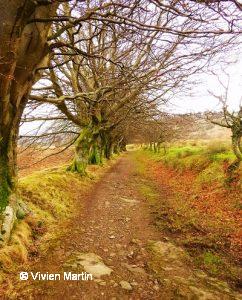
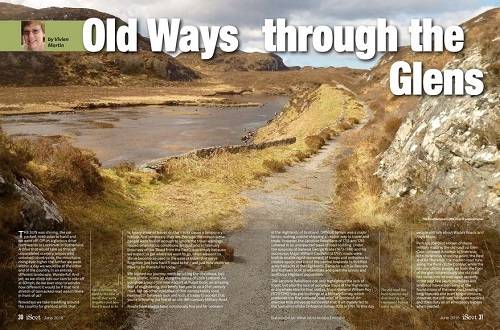 We may not always realise it, but it’s surprising how often we’re following in the footsteps of General Wade or Thomas Telford when we travel around Scotland; particularly the further north we go. And though their roads were fairly basic, they were undoubtedly a great improvement on what went before, when the majority of people had no alternative but to walk and roads were virtually non-existent.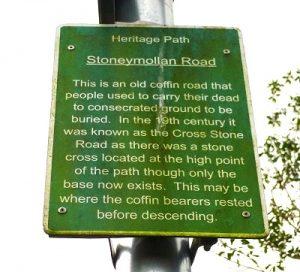



 I’ve been reliably informed by an elderly neighbour that Scotland is going to enjoy really good weather in May and June this year. In theory they should be good months weather-wise, but as that’s not always the case, I’m glad to have this confirmed by neighbourly bunions!


 Gerda Stevenson is a woman of very many talents: actor, playwright, director, poet, singer, song-writer, to name but a few. Now she’s turned again to poetry to draw our attention to the lives and achievements – as well as the hardships and challenges – of sixty-seven amazing Scottish women. Women who deserve our admiration and respect. But first of all we need to know of their existence, for too often women are written out of history and allowed to become invisible.
 Quines: poems in tribute to women of Scotland was four years in the writing. Much reading, researching and tracking down of sources went into getting to know the women she wanted to write about. Women whom she found inspiring and hopes others will find inspirational too.
 I’m grateful that Gerda has brought these women out of the shadows and back into the light. And we need as much light as we can get these days! But I also feel strongly that it’s Gerda’s own strength of character and determination that has achieved this. Her life and beliefs are inspirational too. She’s as much one of these Quines as any of her subjects. And I hope that’s what my article conveys.


 In many ways The Black Island is a straightforward detective thriller, its lasting popularity boosted by the “ripping yarn” nature of its plot. Hitchcock’s film version of John Buchan’s The 39 Steps had come out not long before the first edition of The Black Island and there are similarities between the two. Both have a hero who accidentally stumbles across a gang of villains, who is then wrongly accused of a crime, but escapes capture and heads for the wilds of Scotland, all the while being pursued by criminals and police alike. Though the police in Buchan’s ‘shocker’ could never have been quite as incompetent as that pompous pair, Thomson and Thompson! Despite them however, both stories share exciting pacing and plotting, leading to a denouement in the rugged, wild and isolated Scottish countryside.
 And how did this villainous band manage to get on and off the island? The answer to that comes again from Barra, as Hergé used the beach landing strip at Barra Airport as the model for the landing strip on the beach of the Black Island. All in all, it’s one of the best constructed and thrilling of Hergé’s Tintin canon – thanks in no small measure to the islands of Arran and Barra!
 What wonderful, bold and stirring words! Perhaps doubly so when you realise they were written by a woman living in 16th-17th century Scotland. Even though I studied Scottish History at Edinburgh University, I have to confess I’d never heard of Elizabeth Melville. Though as I was a student some decades ago now, that’s perhaps not totally surprising. Women have tended to be left on the back-burner when it comes to academic recognition. So it’s great that she’s finally being acknowledged for all that she achieved.
 It’s thanks to Dr Jamie Reid-Baxter, a Scottish historian and former European Parliament translator, who has championed her work and brought it to attention as never before. In March 2017 he wrote a lengthy and fascinating article for iScot magazine, and from reading that I learned that Elizabeth was published in 1603, making her Scotland’s first woman in print. Her poem, Ane Godlie Dreame, was such a success that by 1606 it was into its third edition, and by 1735 had gone through at least thirteen editions. Jamie describes the work thus, “480 lines long, it is a dramatic account of the human spirit’s journey from depression and despair to final affirmation, on a cosmic scale.”
 exist because of the struggles of people like Elizabeth Melville. To simply shrug off their beliefs and actions is to demean and belittle the sacrifices of previous generations. And who knows what future generations will smile at about the things we hold dear today!
 the women who went before us. As Jamie says, “People do want to take ownership of long-suppressed aspects of Scotland’s past. The role of the female 50% in creating what we know as Scotland is acknowledged in the Great Tapestry of Scotland, but most of the female images are anonymous because history has been written by men for men.”
 It’s amazing to think that the weight of Planet Earth was calculated in the 18th century thanks to the Scottish mountain Schiehallion! Read how hardy, be-wigged, astronomers and mathematicians worked it all out with little more than the mountain, the stars and a pendulum. Accompanied by some fantastic photos of Schiehallion taken by crime writer and photographer Douglas Skelton, you’ll never see science in the same way again!