
From ghoulies and ghosties / And long-leggedy beasties / And things that go bump in the night, / Good Lord, deliver us!
 Sometimes we like to think that our ancestors were far more superstitious that us: less sophisticated, less modern or up-to-date. But pay a visit to your local cinema and take a look at the large number of films full of vampires, zombies, ghosts and horrific creatures: all there to scare the living daylights out of us. And we even pay for the pleasure! It’s curious, isn’t it. Just what is it in us that enjoys being terrified and faced with such primeval fears?
Back in the 17th century Rev Robert Kirk, the young minister at Kirkton Church in  Aberfoyle, wondered just that. He collected folklore and stories from local people about their experiences with the supernatural. He then examined biblical references and asked whether there might in fact be a class of ethereal beings in this world which we didn’t yet understand, or could fully explain. He’s remembered today as The Fairy Minister, which tends to belittle him, and makes it easy to shrug of his work. But who really knows? And sometimes it’s worth keeping an open mind on such matters!
 Certainly you’ll find that his grave is, more often than not, covered in coins, put there by the superstitious of today hoping for some good luck from their gesture. Or at the Minister’s Tree atop Doon Hill, where there’s a ‘clootie well’, with so many pieces of cloth that the whole hill top can look fairly dirty and untidy. Yet these things are put there as ‘wishes’ to the fairies: or to whatever power may be willing to offer assistance. I sometime wonder if we’re really much less superstitious today after all.
Kirk’s short study, The Secret Commonwealth, helped put Aberfoyle on the map, as did Sir Walter Scott, and the arrival of the railways. Yet there’s much more to the history of this small town than you might think. On top of which, it’s a wonderful base for exploring the Trossachs on foot, by bike or in the car.
This is just a taster for what’s in my article in July’s edition of iScot magazine. So if you want to find out more then simply download the online edition (116 full-colour pages for only £2.99) from iScot at Pocketmags or buy a print copy (£3.99) from any of these newsagents (right):
You won’t be disappointed. But, be warned, you might just find yourself checking under your bed before turning the lights out!
 It’s easy to dismiss small or seemingly remote communites as offering nothing much of interest. But that’s a very mistaken assumption. Everywhere has a history. Everywhere the impact of human life leaves a mark. And small places are no different. In fact, it’s in these places that change is often felt more intensely and with far greater repercussions.
 Maxwell and his otters, sailing over the sea to Skye: Glenelg has all that and much, much more. I know Glenelg well and have visited often, but I still find there’s always something more just waiting to be experienced.


 It’s a place I’ve been back to on many occasions and I’ve written about some of the things that made this place special not just to me and my family, but to many others. It’s good to have places like this, places that played their part in our young lives and continue to hold such a store of fond memories. Whilst I’d still find it impossible to name a favourite place, High Corrie comes pretty close!
 … as well as being great for making Gorse Flower Tea, can also be used to make the most delicious Gorse Flower Cordial, or Gorse Flower Syrup, or Gorse Flower Wine.


 It’s genuinely remote, there are plenty of obstacles to getting there, but it can be done – and it’s definitely worth it! Time of year, weather and MOD activity in the bombardment range, all have to be taken into consideration before you set out. Once these factors are sorted, however, you’re on your way. And fear not – there will be a cup of tea waiting for you when you finally reach the lighthouse!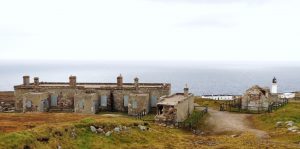
 Cape Wrath was the hvarf, the ‘turning point’ for the Vikings. Life is full of turning points and our reactions to these can have a profound effect on how we live our lives and relate to those around us. At times life can be more challenging than we might prefer, but, with places like Cape Wrath to visit, at least we can’t complain that it’s dull!
 Caves full of bones? Mass murder in the peaceful Highlands of Scotland? No, not in this case! But rather a tale of how some things in nature are undoubtedly stranger than fiction!

 It was freezing cold, with snow in the air and on the hills, and colder the higher we went. But, as so often when walking in Scotland, we knew the destination would be worth it. And that destination was the Loch Sloy dam, flanked by the mighty and rugged Ben Vorlich.
 “After the Second World War, men from all over Scotland came to work on the schemes, attracted by high wages. The highest wages were earned by the men who dug the tunnels. Germans, Poles and Czechs were acknowledged to be skilled tunnellers. They became known as the ‘Tunnel Tigers’ because of their cavalier approach to safety in their quest to earn the huge bonuses that were available. The lower regard for health and safety issues than there is today inevitably led to high accident rates and deaths amongst the workers. No definitive accident statistics exist, but in one camp alone, which housed some 1,000 workers at its peak, there were 22 deaths in just one year. For the vast majority of workers the rewards were great. In the late 1940s, a ‘Tunnel Tiger’ could expect to earn up to £35 a week, compared to £3 or £4 for a Highland estate worker. Mostly they lived in temporary work camps built near the construction sites. Not surprisingly, the sites looked like military camps, sometimes housing up to 3,000 men.”


 iScot magazine have a special free download offer this month. Among many other interesting items, it contains an article I’ve written about the wonderful West Island Way walking trail on the island of Bute.