
 How quick we can be to label other people. To slot them into categories. Pigeonhole them. And, yes, it can make them easier to deal with. But also easier to ignore or dehumanise. Shades of “But of course s/he’s (add your own label), and you know what they’re like!” Case dismissed.
We all do it from time to time. But why? Are we so busy that we don’t want to take the time to try and understand others? Are we uncomfortable with people who don’t think like us, or who don’t believe the things we do? Or are we simply looking for scapegoats when our own frustration, in particular at the debilitating sense of not having any real control of our lives, makes it all too easy to apply a label and then ‘kick the cat’?
Val McDermid is not a woman to be easily labelled, rather is someone who knows her own mind, with clear and forthright views. Takes no nonsense, but is sincere in what she believes. Honest. Someone you can trust. Sometimes, however, the very people you should be able to trust are the ones who wilfully, deliberately and without compunction make life difficult for others. For example, the ‘buffoons’ in Westminster we’ve seen so much of recently, jeering and catcalling and debasing the very term ‘democracy’. Living in a pernicious bubble of greed, power, entitlement, wealth and self-centredness that does, I’m beginning to think, make them a breed apart. Those people who wine and dine at our expense then, without a qualm, vote to strip even the bare minimum from the vulnerable in our society. They really are a breed apart. And not a breed I can easily come to terms with.

Val McDermid’s gripping novel ‘The Skeleton Road’ was inspired in part by Kathy Wilkes
We are all (to state the obvious) individual: all shaped by the circumstances of birth and upbringing. But we don’t live solely as individuals. We live in families, communities, cities, countries. We see the results of our behaviour on others and we have the ability to choose right from wrong. The responsibility for how we behave, and how we treat others, lies firmly on our own shoulders. There’s the (in)famous Philip Larkin poem, This be the Verse, about the effect our parents have on us i.e. the legacy of each preceding generation. But as the clinical psychologist Oliver James says, we can rewrite the script. Despite the brainwashing that took place in Nazi Germany in the run-up to WW2, there were still plenty of people who listened to the voice of conscience that told them ‘This is wrong’. That applies to the ‘buffoons’ in Westminster. They don’t need to be like that. They choose to be.
During our conversation Val McDermid spoke very highly of a former university tutor and friend, Kathy Wilkes, a woman who chose to do what was right, despite the personal cost. Kathy, a philosopher, worked behind the Iron Curtain and lived through the Siege of Dubrovnik (1991-92) during the break-up of Yugoslavia and Croatian War of Independence. As Val says, “She was an extraordinary woman… And perhaps we have choices to make as well. Do we go along with the ‘buffoonery’ that in reality hides a toxic attitude to any kind of social justice, and which is damaging not just individuals, but actively dismantling the very fabric of our society; or do we say ‘Enough is enough’? What sort of country do we want to live in and leave to the next generation? We look back and applaud the Chartists, the Abolitionists, the Suffragettes, the young men who died in senseless wars. But we face as grave a challenge to our society as they ever did – the ball’s in our court now. What are we going to do with it?
The full interview with Val McDermid can be found in July’s iScot Magazine
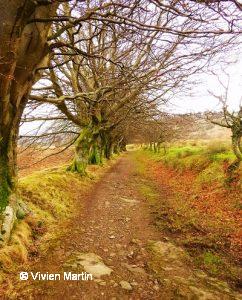
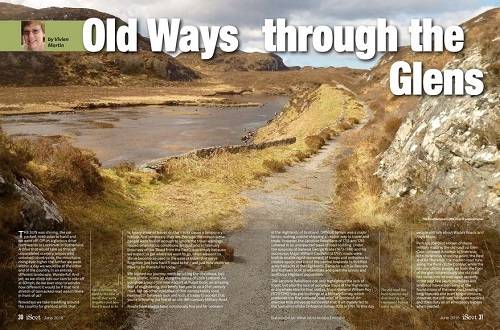 We may not always realise it, but it’s surprising how often we’re following in the footsteps of General Wade or Thomas Telford when we travel around Scotland; particularly the further north we go. And though their roads were fairly basic, they were undoubtedly a great improvement on what went before, when the majority of people had no alternative but to walk and roads were virtually non-existent.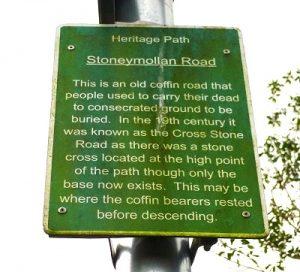

 What is it that makes us who we are? What are the experiences that shape and define us? The circumstances that create our beliefs and values? What are the factors that have made Scotland the country it is today; the country we call home? Intriguing questions that lead in turn to the question of how we preserve our identity, both as individuals and as nations. How do we protect the integrity of our past, our history, our heritage? And crucially, who is it that decides what is important, or significant enough to be preserved? Why are some people and events remembered and celebrated, while others are brushed to one side, forced into obscurity? These were some of the questions I put to Dr Elspeth King, director of the Stirling Smith Museum, and her answers were enlightening.


 I’ve been reliably informed by an elderly neighbour that Scotland is going to enjoy really good weather in May and June this year. In theory they should be good months weather-wise, but as that’s not always the case, I’m glad to have this confirmed by neighbourly bunions!


 Gerda Stevenson is a woman of very many talents: actor, playwright, director, poet, singer, song-writer, to name but a few. Now she’s turned again to poetry to draw our attention to the lives and achievements – as well as the hardships and challenges – of sixty-seven amazing Scottish women. Women who deserve our admiration and respect. But first of all we need to know of their existence, for too often women are written out of history and allowed to become invisible.
 Quines: poems in tribute to women of Scotland was four years in the writing. Much reading, researching and tracking down of sources went into getting to know the women she wanted to write about. Women whom she found inspiring and hopes others will find inspirational too.
 I’m grateful that Gerda has brought these women out of the shadows and back into the light. And we need as much light as we can get these days! But I also feel strongly that it’s Gerda’s own strength of character and determination that has achieved this. Her life and beliefs are inspirational too. She’s as much one of these Quines as any of her subjects. And I hope that’s what my article conveys.
 Even on a very chilly day, it’s hard not be impressed by the changes taking place at Bowling Basin and Harbour. Many of the rotting hulks have gone, landscaping is well underway, and the old Customs House is the setting for new ventures. Looking at it now, it can be hard to believe that the canal closed in 1963 and that it was only after decades of campaigning that it was finally re-opened in 2001.
 The canal opened in 1790, and if you follow the towpath, it will take you from Bowling all the way to Grangemouth, across the narrowest stretch of Lowland Scotland, linking not only two of Scotland’s finest rivers, the Clyde and the Forth, but also the west and east coasts of the country.
 At Bowling, you’ll find the marina, and the canal itself, have lots of interesting boats to have a look at: from the sleek and shiny to the slightly more rickety and ramshackle. You’ll also find that the old railway arches have been tastefully refurbished, housing shops and a cafe with a difference: the Dug Cafe, where we saw lots of dogs and their owners, and walkers and cyclists, enjoying tea and toast. Although we no longer have a dog ourselves, it was good to find a cafe that is so welcoming to (well-behaved) dogs.

 The Wall had sixteen forts (with many fortlets in between), all linked by a road known as the Military Way. Commissioned by Emperor Antonius Pius in AD 142, it was abandonned less than a decade after completion. It seems those ancient Caledonians were, very understandably, not too keen on having Roman masters! But, tempora mutantur, as those self-same Romans would have said, and thankfully you’ll find that there’s a very different welcome for the visitors of today!


 In many ways The Black Island is a straightforward detective thriller, its lasting popularity boosted by the “ripping yarn” nature of its plot. Hitchcock’s film version of John Buchan’s The 39 Steps had come out not long before the first edition of The Black Island and there are similarities between the two. Both have a hero who accidentally stumbles across a gang of villains, who is then wrongly accused of a crime, but escapes capture and heads for the wilds of Scotland, all the while being pursued by criminals and police alike. Though the police in Buchan’s ‘shocker’ could never have been quite as incompetent as that pompous pair, Thomson and Thompson! Despite them however, both stories share exciting pacing and plotting, leading to a denouement in the rugged, wild and isolated Scottish countryside.
 And how did this villainous band manage to get on and off the island? The answer to that comes again from Barra, as Hergé used the beach landing strip at Barra Airport as the model for the landing strip on the beach of the Black Island. All in all, it’s one of the best constructed and thrilling of Hergé’s Tintin canon – thanks in no small measure to the islands of Arran and Barra!
 What wonderful, bold and stirring words! Perhaps doubly so when you realise they were written by a woman living in 16th-17th century Scotland. Even though I studied Scottish History at Edinburgh University, I have to confess I’d never heard of Elizabeth Melville. Though as I was a student some decades ago now, that’s perhaps not totally surprising. Women have tended to be left on the back-burner when it comes to academic recognition. So it’s great that she’s finally being acknowledged for all that she achieved.
 It’s thanks to Dr Jamie Reid-Baxter, a Scottish historian and former European Parliament translator, who has championed her work and brought it to attention as never before. In March 2017 he wrote a lengthy and fascinating article for iScot magazine, and from reading that I learned that Elizabeth was published in 1603, making her Scotland’s first woman in print. Her poem, Ane Godlie Dreame, was such a success that by 1606 it was into its third edition, and by 1735 had gone through at least thirteen editions. Jamie describes the work thus, “480 lines long, it is a dramatic account of the human spirit’s journey from depression and despair to final affirmation, on a cosmic scale.”
 exist because of the struggles of people like Elizabeth Melville. To simply shrug off their beliefs and actions is to demean and belittle the sacrifices of previous generations. And who knows what future generations will smile at about the things we hold dear today!
 the women who went before us. As Jamie says, “People do want to take ownership of long-suppressed aspects of Scotland’s past. The role of the female 50% in creating what we know as Scotland is acknowledged in the Great Tapestry of Scotland, but most of the female images are anonymous because history has been written by men for men.”
 It’s amazing to think that the weight of Planet Earth was calculated in the 18th century thanks to the Scottish mountain Schiehallion! Read how hardy, be-wigged, astronomers and mathematicians worked it all out with little more than the mountain, the stars and a pendulum. Accompanied by some fantastic photos of Schiehallion taken by crime writer and photographer Douglas Skelton, you’ll never see science in the same way again!